
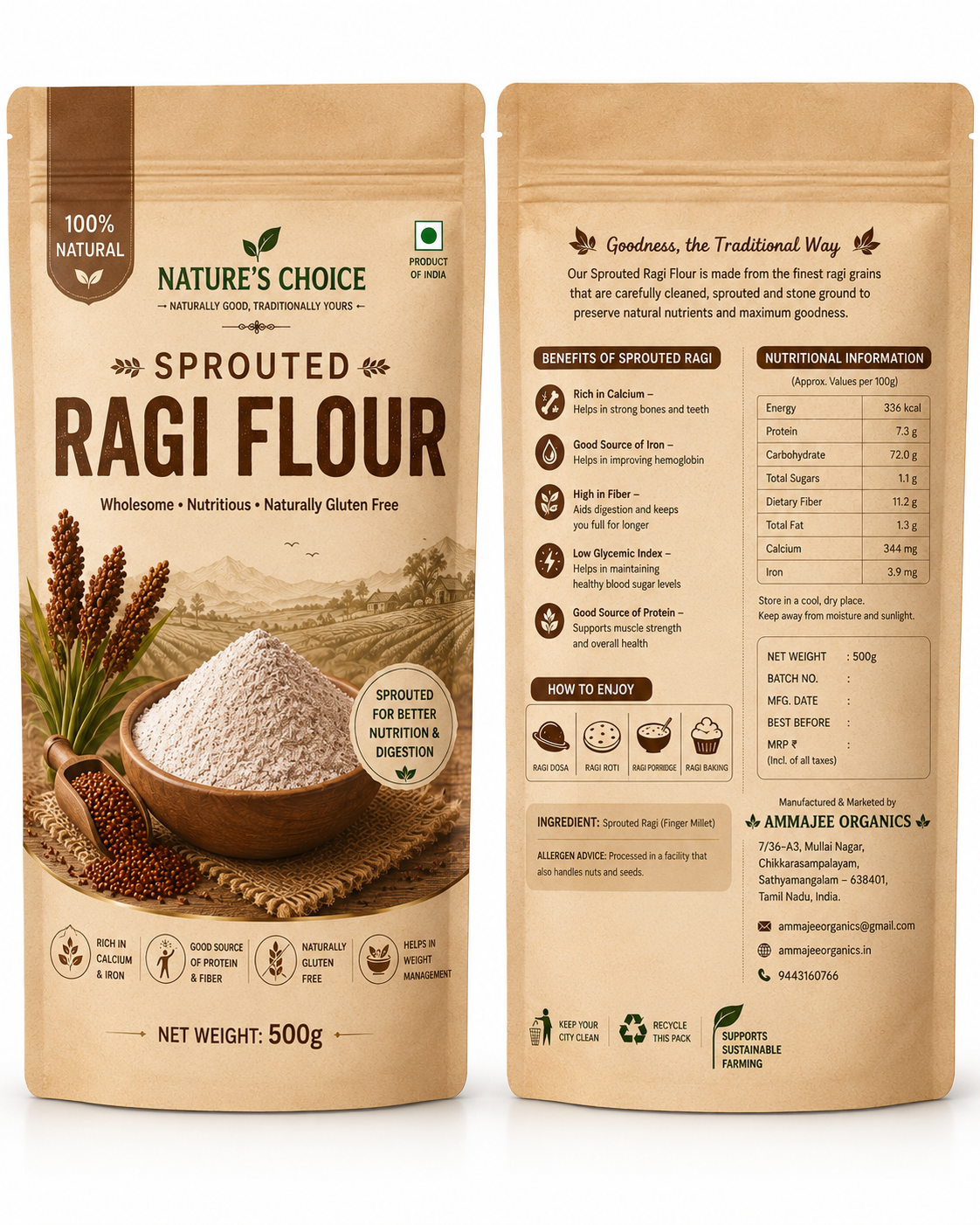
Description
- Carbohydrates: Ragi is a complex carbohydrate that is slowly digested, leading to a sustained release of energy.
- Protein: Ragi is high in protein, containing about 7-8 grams per 100 grams of grain. It is also a good source of the amino acid methionine, which is often limited in plant-based diets.
- Fat: Ragi is low in fat, with less than 2 grams per 100 grams of grain.
- Calcium: Ragi is a rich source of calcium, containing about 350-400 mg per 100 grams of grain.
- Iron: Ragi is also a good source of iron, containing about 3-4 mg per 100 grams of grain. This makes it an important food for preventing anemia.
- Magnesium: Ragi is high in magnesium, which is important for maintaining healthy bones, muscles, and nerves. It contains about 130-150 mg per 100 grams of grain.
- Zinc: Ragi is a good source of zinc, which is important for immune function, wound healing, and cell growth. It contains about 2-3 mg per 100 grams of grain.
- Polyphenols: Ragi contains several types of polyphenols, including flavonoids and tannins, which have antioxidant and anti-inflammatory properties.
- Phytates: Ragi also contains phytates, which can reduce the absorption of certain minerals like iron and zinc. However, sprouting or fermenting the grain can help to reduce the phytate content and enhance nutrient bioavailability.
Sprouted ragi is a form of ragi grain that has been allowed to germinate or sprout before it is consumed. The sprouting process changes the nutritional composition of ragi in several ways, making it different from normal ragi. Here are a few key differences:
- Increased nutrient content: Sprouting increases the availability of several nutrients in ragi, including vitamin C, folate, and iron. It also increases the bioavailability of certain minerals like calcium, zinc, and magnesium.
- Reduced anti-nutrients: Ragi contains anti-nutrients like phytates, which can interfere with the absorption of certain nutrients. Sprouting ragi can help to reduce the levels of phytates and other anti-nutrients, making it easier for the body to absorb the nutrients in ragi.
- Improved digestibility: Sprouting can help to break down complex carbohydrates and proteins in ragi, making it easier for the body to digest and absorb these nutrients.
Sprouted ragi tends to be more nutrient-dense compared to normal ragi, particularly in terms of calcium, magnesium, and folate and it has been shown to have higher levels of certain phytochemicals, including phenolic compounds, flavonoids, and antioxidants, compared to normal ragi. This is due to the fact that sprouting can help to increase the bioavailability of these compounds.
Here are a few reasons why sprouted ragi is beneficial for children:
- Nutrient density: Sprouted ragi is packed with nutrients that are important for children’s growth and development. It is a good source of calcium, which is important for strong bones and teeth. It also contains iron, which is essential for healthy blood and brain function, and folate, which is important for healthy growth and development.
- Digestibility: Sprouted ragi is easier to digest compared to normal ragi. The process of sprouting helps to break down complex carbohydrates and proteins, which can be difficult for young children to digest. This makes sprouted ragi a good option for children who may have trouble digesting other grains or who are experiencing digestive issues.
- Boosts Immunity: Sprouted ragi is rich in antioxidants, which can help boost immunity and protect against diseases.
- Helps in Weight Management: Sprouted ragi is high in dietary fiber, which can promote a feeling of fullness and aid in weight management. This can be beneficial for children who are overweight or at risk of becoming overweight.
- Allergy-friendly: Sprouted ragi is gluten-free and is therefore a good option for children who have gluten sensitivities or allergies. It is also low in allergens compared to other grains like wheat, which can be important for children who are at risk for food allergies.
- Versatility: Sprouted ragi can be used in a variety of ways in children’s diets. It can be ground into flour and used to make porridges, breads, and other baked goods. It can also be added to smoothies or used as a thickener in soups and stews.

Reviews
There are no reviews yet.